

What is Cargo Semi Trailer
A cargo semi trailer is a trailer without a front axle. The combination of a semi-trailer and a tractor truck is called a semi-trailer truck (also known simply as a "semi-trailer", "tractor trailer", or "semi" in the United States). A tractor unit pulling a semi-trailer A truck pulling a semitrailer using a trailer dolly.
Benefits of Cargo Semi Trailer
Increased Efficiency
One of the most significant benefits of using cargo semi trailer is their ability to increase efficiency in transportation operations. Cargo semi trailer are able to carry larger loads than traditional trucks, allowing businesses to transport more goods in fewer trips. This can help companies save time and money by reducing the number of deliveries needed to fulfill customer orders. Additionally, cargo semi trailer can be easily detached from the truck cab, making it quick and easy to load and unload goods at various locations.
Cost Savings
Another advantage of using cargo semi trailer is the cost savings they provide. By transporting larger loads in a single trip, businesses can reduce fuel expenses and labor costs associated with multiple deliveries. Additionally, because cargo semi trailers are detachable, companies can use the same trailer for different types of goods, reducing the need to invest in multiple specialized vehicles. This can result in significant savings over time, making cargo semi trailers a cost-effective transportation solution for businesses of all sizes.
Versatility
Cargo semi trailers are available in a variety of sizes and configurations, making them a versatile option for transporting different types of goods. From refrigerated trailers for perishable goods to flatbed trailers for oversized cargo, there is a semi trailer to meet virtually any transportation need. This versatility allows businesses to adapt to changing market demands and expand their capabilities without having to invest in new equipment.
Enhanced Safety
Cargo semi trailers are designed with safety in mind, featuring advanced braking systems, sturdy construction, and other safety features to protect both the goods being transported and the drivers on the road. This can give businesses peace of mind knowing that their products are secure during transit and that their drivers are operating a safe vehicle. Additionally, the detachable nature of cargo semi trailers can make it easier for drivers to maneuver in tight spaces and navigate difficult road conditions, further enhancing safety on the road.


Why Choose us
Quality
We offer high quality services and products that are relatable and resonate with your business needs.We have won the satisfaction and trust of our customers and have been awarded the title of "National Special Vehicle Quality Stable Qualified Enterprise".
Before sales service
We will supply 24 hours online service,the specialized sales manager will introduce our semi trailer information details to you for your satisfied if you want to learn more detailed about our products.
After sales service
We can supply one year warranty service after you purchased our trailers.If you are interested in our product,don't hesitate ,just contact us!
Quality services
Our company always adheres to the principle of "customer first, survival based on quality, and development based on reputation", and provides comprehensive and multi-level management system and first-class services to new and old customers.
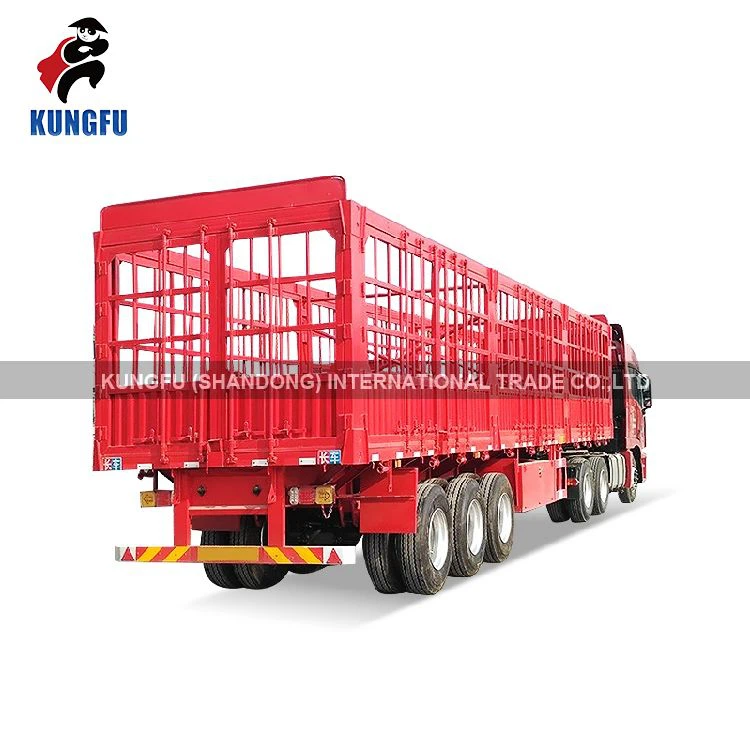
Position of the Axle and Weight Support
Semi trailers don't have front axles. Therefore, it's crucial to disperse the proper tractor-trailer weight on each axle in order to remain compliant. They sustain half of the weight of the vehicle by being on the back portion of it.
The back of the truck supports the remaining half of the weight. The key to preventing overweight difficulties on a cargo semi trailer is understanding how to distribute the weight.
In full trailers, the front and rear axles support the entire trailer's weight, so they don't have this issue.
Connection
The kingpin of the cargo semi trailer is what attaches it to the semi-truck. It's the device that secures the trailer to the truck.
The front hook of the truck is used to attach a full trailer to it, securing it to the tractor's hitch.
● Dimension and Capacity
The dimensions of a cargo semi trailer is:
● 48 to 53 feet long.
● 8.5 feet wide.
● 13 feet high.
Weight Threshold: 80,000 lbs
The standard dimension of a full trailer is:
● 10 to 26 feet long.
● 8.5 feet wide.
● 13 to 14 feet high.
Weight Threshold: 26,000 lbs
Logistics
Long-distance transporting is done with semi trailers. They are quick to load and unload, easier to handle, and easier to move. They are also utilized to carry bulkier and heavier cargo.
Short-distance freight transportation to factories, ports, and warehouses typically uses full trailers. Most of the time, they deliver at various locations while unloading merchandise at various drop-off spots.
Body Structure: Typically, cargo semi trailers possess a robust frame that can accommodate various types of cargo, from standard palletized goods to heavy machinery. The construction material often includes high-strength steel or aluminum, offering a balance between durability and weight.
Tire Configuration: Cargo semi trailers commonly feature multiple axle configurations, ranging from 2 to 5 axles, to distribute the cargo weight evenly and comply with road weight regulations. This variability ensures optimal flexibility for different load requirements.
Connection Mechanism: The critical component that attaches the cargo semi trailer to the tractor unit is the fifth wheel coupling, providing a secure and pivotable link that enables the effective maneuverability of the combined vehicle.

List of Activities in a Preventative Maintenance Checklist for Cargo Semi Trailer
Make a Fleet Inventory
Firstly, the Preventative maintenance checklist should include details of the vehicles. You should note the VIN (Vehicle Identification Number), brand and model, year of acquisition, and current mileage of each truck. You need to ensure that every cargo semi trailer should have this checklist in its cabin. The activities should be separated, depending on their frequencies. There have to be separate checklists for Daily, Weekly, Monthly, Half-yearly, and Annual activities.
Engine
The engine is the heart of every automobile and needs the utmost attention. You need to take special care to ensure it is in good condition. Following inspections are required while checking the engine for preventative maintenance for cargo semi trailer.
● Check engine for oil, fuel, and coolant leakages
● Check power steering level
● Check radiator mounting for cracks or looseness
● Check A/c condenser mounting for cracks
● Test antifreeze protection
● Inspect coolant hoses and test the cooling system
● Inspect coolant recovery and pressure test radiator cap
● Check engine wire seals and connectors for damage
Check Fluid Levels Regularly
Fluids are essential for vehicle maintenance. You must check all fluids, including engine oil, brake oil, coolant or antifreeze, and power steering. Verifying the levels of these fluids does not take a long time. The fleet manager must ensure these requirements have been adhered to. In this way, any visible leakages between checks can be arrested immediately and fixed.
Changing Fluids
Changing fluids is critical to your vehicle maintenance. The frequency of changing fluids depends on the distance driven and the weight of the load carried by the truck. You need to follow the manufacturer's guidelines for changing fluids. You should specifically instruct the truck drivers not to compromise on the quality or brand of fluids in case of a top-up requirement during the journey.
Check Air Filters
The air filter is an integral part of vehicle maintenance. The air filter protects your engine and oil from outside particles and pollutants that contaminate and damage the engine eventually. As the air filter gets clogged, it will reduce the amount of air getting into your engine and impact its performance. Changing the air filter would depend on the type of routes your truck takes. If you drive in less polluted cities, the air filter needs a change after 20000 miles. In case of dusty roads, you need to change it between 10000 to 15000 miles.
Inspect Brakes
The most critical part of any vehicle maintenance is brake inspection. Brakes are life savers and have to be in the best condition. The brakes face the maximum brunt, and they are most likely to wear out or damage fast. You need to constantly monitor the brakes of all the vehicles and replace them immediately on the first signs of wear. Take your truck to the workshop if the brake pad linings are not compliant with the minimum width set by the FMSCA (The Federal Motor Carrier Safety Administration). Brakes are of two types Air brakes & Hydraulic brakes. You need to consider the following points while checking brakes:
Air Brake Inspection
● Inspect air lines and front brake chambers
● Inspect front brake lining/pad condition and thickness
● Inspect front brake drum/rotor condition
● Perform ABS (Anti-lock brake) self-test
Hydraulic Brake Inspection
● Inspect master cylinder and fluid condition
● Inspect both front & rear brakes and lines
● Inspect front brake lining/pad condition and thickness
● Inspect all valves, hydraulic lines, hoses, and fittings for leaks
Tires
Tires need frequent inspection as they are prone to wear out soon. You have to look for bulges, uneven wear, cuts, abrasions, and cuts on the tread area and the sides of the tires. You need to check the tread depth by using the tread depth gauge on each tire. You should ensure that the tires are compliant with the minimum tread depth permitted by federal regulations. Make sure you have cargo semi trailer tires installed in your trucks. You need to do the following inspections of tires as a part of preventative maintenance.
● Inspect for sidewall damage and cuts
● Inspect for irregular wear-out patterns
● Check wheel bearings and lube cap
● Check and record the tire pressure
● Check for loose lug nuts
● Inspect for damaged or cracked wheels
● Check and record tread design
● Check wheel bearings and axle flange seals for leakages
Electricals
Electricals are very important in preventative maintenance activity. You need to check whether the headlights, flashers, turn signals, and brake lights on the truck and trailer are in perfect condition. Check if there are any cracks or holes in the lens. Check whether the all-around wiring in the truck has no cuts or abrasions. Additionally, check the batteries for loose connections or corrosion, and replace them immediately for any leakage.
In-Cab Inspection
Cab inspections are vital, as it is here that the drivers of the cargo semi trailer spend most of their time. The cabin must be comfortable and conducive for long trips. You need to consider the following points while performing preventative maintenance:
● Check ignition key and start button
● Check seat belts, seat suspension, and overall condition
● Check dash lights and gauge illumination
● Check dash gauges
● Check horn operation
● Check defroster and A/c heater controls
● Check clutch pedals
● Check steering operation
● Check parking brake operation
● Check wiper blades
● Check mirror & brackets
● Check window glass and operation
● Check and lube doors

Just as we stated before, there’s no overall length limit for 18 wheelers or big rigs. Even so, there are certain minimum lengths for tractors and trailers attached to the rear axle.
First, we have the classic truck tractor-semitrailer combination. The Federal length minimum for these cargo semi trailers is 48 feet.
Moreover, if the cargo semi trailer counts on two cargo units, then the total length must not go over 65 feet. In other words, each unit must be between 28 to 28.5 feet long. If it’s a maxi cube unit, then the cargo boxes must not extend 34 feet maximum.
Our Company

Our company has a large number of research, development, production, and sales personnel for specialized automotive products, as well as complete production processes for stamping, welding, painting, and final assembly. After years of dedicated research and manufacturing, with strong technical strength and perfect after-sales service, we have become a designated national specialized vehicle production enterprise. We have produced 4000 specialized vehicles of various types annually, and our products meet or exceed various performance indicators of similar domestic products. For many years, our company has produced tank trucks, vehicle transport vehicles, box trucks, dump trucks, and various series of semi-trailers, full trailers, and other products, and has undertaken the modification and design business of specialized vehicles. We have won the satisfaction and trust of our customers and have been awarded the title of "National Special Vehicle Quality Stable Qualified Enterprise".
Asked Questions
As one of the leading cargo semi trailer manufacturers in China, we warmly welcome you to buy high-grade cargo semi trailer for sale here from our factory. All our products are with high quality and competitive price.