

What is Container Trailer
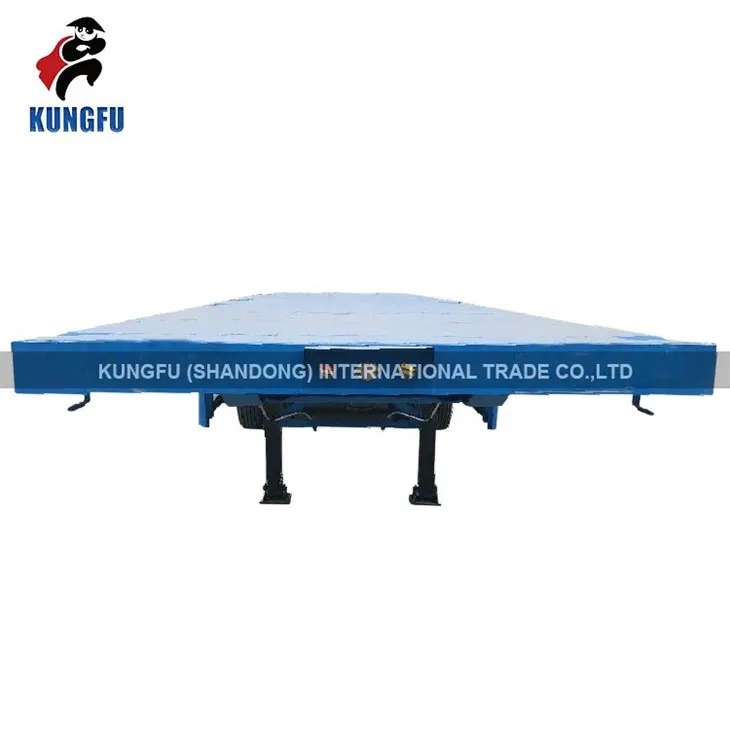
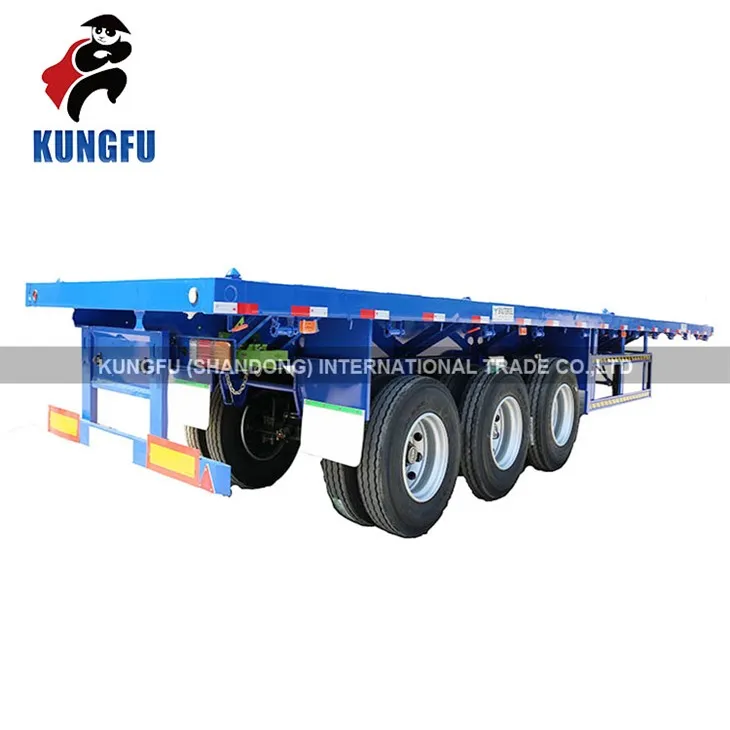
These container trailer are equipped to transport shipping containers of different dimensions, including those that range from 20 ft to 40 ft for shipment purposes. Mainly carry shipping containers, which has to be carried in the ships or trains across the country and internationally.
Benefits of Container Trailer
Simple Loading
A container trailer is able to carry most items you can think of, as its space permits. Whatever you're loading, be assured that getting it on the truck will not be a hassle at all. The large and flat area will allow you to arrange your items in an optimal arrangement to suit your needs. The low and hinged sides will also allow you to load items from the side. Secure your loads by tying them down with webbing or ropes, tightening them with ratchet straps for additional stability.
Large Inventory Capacity
As mentioned, the large and flat bed of the truck allows for optimal load arrangement. What it also provides, is a large amount of storage space for your moving needs. From bricks to beer and scallions to scaffolding, there's a good chance that you'll only need one trip whenever transporting anything with a container trailer. This factor makes container trailer all the more optimal for your shipping needs.
Ability to Handle Heavy Loads
Container trailer are the best workhorses out there. Hauling heavy loads daily is what they are made for. Carrying heavy equipment and materials is no problem for a container trailer, as long as it's all within the weight limit. Do check how much a truck can carry before purchase, to get one best catered to your needs.
Variety in Size and Lengths
With different shipping needs, comes different container trailer sizes. So many lengths, sizes and styles to choose from! 12 feet to 20 feet, articulated or rigid, the choice is yours. Whatever you need, it's likely that there's a container trailer out on the market that fits it.
Towing Capabilities
Container trailer are built for endurance and power. You never know when another vehicle can suddenly break down during a job. A container trailer can more than easily tow other vehicles or wheeled equipment. If you're in the towing business, enough said. As you can see, container trailer are ideal vehicles to get the job done. Its versatility and uses are unparalleled in the market. Get one today, and you'll never need to consider other trucks again!


Why Choose us
Quality
We offer high quality services and products that are relatable and resonate with your business needs.We have won the satisfaction and trust of our customers and have been awarded the title of "National Special Vehicle Quality Stable Qualified Enterprise".
Before sales service
We will supply 24 hours online service,the specialized sales manager will introduce our semi trailer information details to you for your satisfied if you want to learn more detailed about our products.
After sales service
We can supply one year warranty service after you purchased our trailers.If you are interested in our product,don't hesitate ,just contact us!
Quality services
Our company always adheres to the principle of "customer first, survival based on quality, and development based on reputation", and provides comprehensive and multi-level management system and first-class services to new and old customers.
Application of Container Trailer
Moving Scrap Metals and Recyclables
Across the country, container trailer are used regularly to haul scrap metals, baled tires, and other recyclables. The large bed of these trailers makes it possible to pile on large amounts of materials.
In many cases, scrap metal is unwieldy and hard to organize. From old piping to residential refrigerators, a container trailer can handle loads that are more difficult to fit into confined spaces. Additionally, items such as baled tires do not need protection from the elements, which makes a container trailer the perfect fit.
Carrying Landscaping Items
From the backhoes used to dig out trenches to full-grown trees for planting, a container trailer is often used to transport landscaping goods and equipment.
With the numerous sizes of container trailer available on the market, there is a container trailer to match any landscaping needs. For a localized residential landscaping team, a small flatbed that can be towed by a pickup truck will make it easy to transport saplings, ride-on lawnmowers, and various tools. For a larger business, a full-sized flatbed capable of hauling large equipment is optimal for improving business efficiencies.
No matter how big or small the project, a container trailer offers landscaping teams an efficient method for hauling all tools, equipment, and supplies on one deck.
Transporting Oil and Gas Rigs
In many states, the oil and gas industry has seen a huge boom. This has required teams to constantly build up and tear down rigs in record time. Container trailer are central to this process. With ample room and the ability to tie down multiple pieces of equipment on one flatbed, these trailers make it possible for teams to efficiently transport entire rigs from one job site to another.
Moving Agricultural Equipment and Goods
Farmers and ranchers alike turn to container trailer to move equipment and goods around their property. From hauling hay bales to the barn to moving bulky field equipment from one field to the next, container trailer are central to the daily operations of most agricultural businesses.
Not only do container trailer make it easy to haul anything necessary for daily ag work, but they are also available in a variety of sizes, allowing farmers and ranchers to choose something that will pair well with their existing truck.
Container Trailer Craftsmanship And Quality
Welding: The welding of the container trailer must be precise and well-executed to ensure that it is sturdy and strong.
Materials: High-quality materials must be used to ensure that the trailer is durable and long-lasting.
Attention to Detail: Attention to detail is essential. Every aspect of the container trailer must be carefully crafted and executed to ensure that it is of high quality.
Other Differentiators: Container trailers vary and there may be differentiators that set them apart from other storage solutions.
Mobility: They are mobile and can be moved easily from location to location. This is especially useful for businesses that frequently relocate or individuals who frequently move.
Durability: They are made of strong materials such as steel, which makes them durable and resistant to harsh weather conditions. This ensures that your belongings are protected from the elements.
How to Choose the Right Container Trailer
Weight Capacity Requirements
All these container trailers can carry a considerable amount of weight. However, the 2 axles / 3 axles container chassis container trailer is of much help when weight considerations are to be made. Its construction has primarily been made to provide a chassis that can help you carry high weight containers. Most importantly, this can be adjusted to meet your desired conditions of maneuverability, loading, offloading and axle spacing.
Number of Axles
Based on the amount of cargo to carry, container trailer considerations can be made looking at the number of axles for each container trailer. They could be 2 axles or 3 axles. Don't expect one with more than 3 axles because a container's max weight capacity is 30 tons. For instance, the flatbed container trailer structure has a capability of supporting a number of wheel axle assemblies at different positions along the container trailer length.
Application
If you use the container trailer to transport not only container, but also some other cargo, it is better to choose the flatbed container trailer type. The container chassis is only used for container. Should your work require loading and offloading at certain inclined positions, then the container tilt container trailer would be the best choice for you.
Price
Cost is also an important factor to consider in your choice of a container trailer. If all you need is a simple container trailer for a simple application, it wouldn't be wise to choose the container tilt container trailer. The container tilt type container trailer has a higher price than the rest. This is primarily due to its advanced lifting system. A flatbed or a container chassis will do.
Container Trailer Maintenance Tips
Prevent flatbed equipment issues before they happen
Issues can arise in every component of your container trailer, but you should pay special attention to these points that are especially vulnerable to wear due to rust, contact with the ground, and frequent and prolonged stress:
– Tire inflation : Maintaining proper air pressure is essential to extending the life of your container trailer tires. Regularly check all tires with a properly calibrated air pressure gauge and inspect for punctures, cuts, or damaged valve core stems. Take extra care to maintain the inside dual tires, as wear on these tires can go unnoticed.
– Wheel ends : Check all hubcaps regularly for leaks to prevent water seepage, and inspect wheel ends for proper lubrication and water contamination. Water intrusion can lead to bearing and seal failure, which can lead to axle damage. It's important to resolve seepage issues and maintain adequate lubrication levels.
– Landing gear : Pressure-wash the landing gear and chassis to remove any dirt or grit that has collected during use. Lubricate the grease fittings. Check attachment points for proper torque levels on the landing gear and bracing. You depend on your landing gear to stabilize your flatbed while it's detached from the truck, so keeping it maintained helps to ensure your equipment remains level.
Establish a maintenance schedule
Long routes through rain, snow, and sun will naturally degrade your equipment, but the more vulnerable parts of your container container trailer will require more frequent preventative maintenance. It's important to follow regular one- and six-month maintenance schedules so early signs of wear and damage to your high-risk components don't go unchecked.
Once a month:
– Check tires for wear and proper air pressure.
– Check lights and reflectors, inspect wiring.
– Inspect body for physical damage – paint, license plate, and mud flaps.
– Check landing gear legs and kingpin.
– Check cargo securement: check winches for smooth operation and winch straps for deterioration or tears.
Every six months:
– Check brake lining, inspect and record lining wear.
– Inspect wheel bearings, check for oil leaks.
– Check axle alignment, record the condition.
– Inspect for leaks and chafing, check seals and couplers, repaint wheels if showing wear, and check torque arms, springs, and U-bolts.
– Check all suspension components.
– Check tires, wheels, and lighting.
– Check landing gear legs and kingpin.
Make the most of scheduled flatbed maintenance
Preventative container trailermaintenance enables you to get in front of problems before they become costly and pose a risk to your drivers and other motorists. It's important to ensure your technicians' safety during all repairs and to learn everything you can from tune-ups so you can continuously improve your preventative maintenance schedule.
Emergency repairs on the side of the road can be exceedingly dangerous. Speeding traffic can be a risk for drivers and technicians, especially if the damaged flatbed is obstructing or crowding the motorway, and other drivers can potentially strike the sidelined container trailer.
Conducting preventative maintenance in a controlled environment is the best way to ensure the safety and timely success of your technicians. Keeping records of what led to unscheduled maintenance when it does occur can help you understand the unique factors affecting your fleet.
By logging wear and tear and axle alignment, you can leverage those findings to create a more efficient and timely maintenance schedule. Different routes and seasons pose their own challenges, so keeping your preventative maintenance on schedule according to your vehicle's needs will save you time and money.
Keep a close eye on flatbed maintenance
A commitment to preventative maintenance for your flatbed container trailer solution is the best way to keep your equipment on the road, protect your drivers, and maintain your hard-won reputation among your customers. Simply reacting to problems as they happen will put all of these at risk and needlessly set you up for headaches that can be avoided.
Our Company

Our company has a large number of research, development, production, and sales personnel for specialized automotive products, as well as complete production processes for stamping, welding, painting, and final assembly. After years of dedicated research and manufacturing, with strong technical strength and perfect after-sales service, we have become a designated national specialized vehicle production enterprise. We have produced 4000 specialized vehicles of various types annually, and our products meet or exceed various performance indicators of similar domestic products. For many years, our company has produced tank trucks, vehicle transport vehicles, box trucks, dump trucks, and various series of semi-trailers, full trailers, and other products, and has undertaken the modification and design business of specialized vehicles. We have won the satisfaction and trust of our customers and have been awarded the title of "National Special Vehicle Quality Stable Qualified Enterprise".
Asked Questions
As one of the leading container trailer manufacturers in China, we warmly welcome you to buy high-grade container trailer for sale here from our factory. All our products are with high quality and competitive price.
side opening container trailer, container hauling trailer, shipping container trailer