

As a flatbed semi - trailer supplier, I am often asked the question: "Can a flatbed semi - trailer be customized?" The answer is a resounding yes. In today's dynamic transportation and logistics industry, the need for customized flatbed semi - trailers has become increasingly prominent.
Understanding the Basics of Flatbed Semi - Trailers
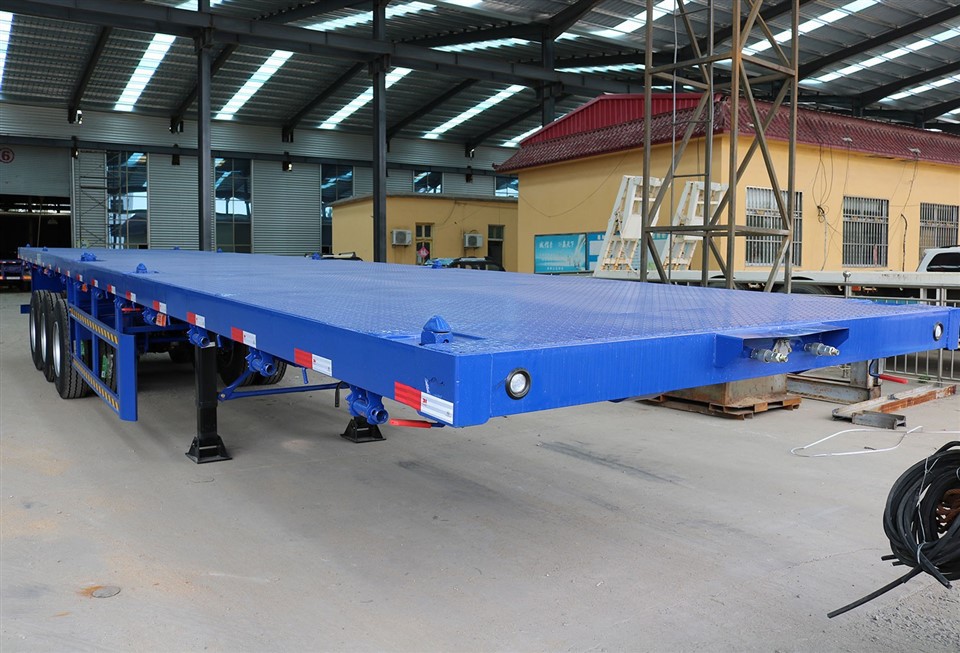
Before delving into customization, it's essential to know what a flatbed semi - trailer is. A flatbed semi - trailer is a type of trailer that has an open, flat deck without sides or a roof. This design allows for easy loading and unloading of various types of cargo, including large, bulky, or oddly - shaped items. They are commonly used in industries such as construction, agriculture, and manufacturing for transporting goods like steel pipes, lumber, and heavy machinery.
Why Customization is Needed
Cargo - Specific Requirements
Different types of cargo have unique transportation needs. For example, if you are transporting long steel beams, you may need a flatbed semi - trailer with an extended length to ensure the cargo can be securely placed. On the other hand, if you are carrying machinery that requires a stable base, a flatbed with a reinforced deck might be necessary. Customization allows trailers to be tailored to handle specific cargo requirements, ensuring safe and efficient transportation.
Operational Considerations
Operational factors also play a crucial role in the need for customization. Some transportation routes may have height or weight restrictions. In such cases, a customized flatbed semi - trailer can be designed to meet these limitations while still providing sufficient cargo capacity. Additionally, if the trailer is used in specific weather conditions, such as extreme cold or high humidity, custom features like corrosion - resistant materials or insulation can be added.
Fleet Management
For companies with a fleet of flatbed semi - trailers, customization can help in optimizing fleet management. Trailers can be customized to match specific operational patterns, reducing downtime and increasing overall efficiency. For instance, trailers used for local deliveries may have different configurations compared to those used for long - haul transportation.
Customization Options
Structural Customization
One of the most common forms of customization is structural modification. This can include changing the length, width, and height of the flatbed. For example, a 4 Axle Flatbed Semi Trailer may be customized to have a longer deck to accommodate oversized cargo. The frame of the trailer can also be reinforced or modified to handle heavier loads.
Deck Customization
The deck of a flatbed semi - trailer can be customized in various ways. Different types of deck materials can be used, such as steel, aluminum, or wood, depending on the cargo requirements. For example, a wooden deck may be preferred for transporting fragile items as it provides a more forgiving surface. Additionally, the deck can be equipped with features like tie - down points, stake pockets, or winch tracks to secure the cargo effectively.
Axle and Suspension Customization
The axle and suspension system can also be customized. The number of axles can be adjusted based on the weight capacity needed. A 3 Axle 40ft Flatbed Trailers For Sale can provide a balance between load - carrying capacity and maneuverability. Different suspension types, such as air suspension or leaf spring suspension, can be chosen depending on the terrain and the smoothness of the ride required.
Electronic and Safety Customization
In modern flatbed semi - trailers, electronic and safety features are increasingly important. Customization can include adding GPS tracking systems for better fleet management and security. Safety features such as anti - lock braking systems (ABS), electronic stability control (ESC), and backup cameras can also be incorporated to enhance the safety of the trailer during operation.
The Customization Process
Consultation
The customization process typically begins with a consultation. As a supplier, we work closely with our customers to understand their specific requirements. This includes discussing the type of cargo, transportation routes, and any other operational considerations. By having a comprehensive understanding of the customer's needs, we can provide accurate and effective customization solutions.
Design and Engineering
Once the requirements are clear, our design and engineering team gets to work. They use advanced computer - aided design (CAD) software to create detailed plans for the customized flatbed semi - trailer. These plans take into account all the customization options discussed, ensuring that the final product meets the highest standards of quality and functionality.
Manufacturing
After the design is finalized, the manufacturing process begins. Our state - of - the - art manufacturing facilities are equipped with the latest technology and equipment to produce high - quality flatbed semi - trailers. Skilled workers carefully assemble the trailer according to the design specifications, using the best materials available.
Testing and Quality Assurance
Before the customized flatbed semi - trailer is delivered to the customer, it undergoes rigorous testing and quality assurance procedures. This includes testing the structural integrity, the functionality of all components, and the performance of any electronic or safety features. Only after the trailer passes all the tests is it ready for delivery.
Examples of Customized Flatbed Semi - Trailers
40ft Flatbed Semi Trailer for Construction
A 40ft flatbed semi - trailer customized for the construction industry might have a reinforced deck to handle heavy construction materials such as concrete blocks and steel bars. It may also be equipped with additional tie - down points to secure the cargo during transportation. The trailer could have a removable side rail system, allowing for easy loading and unloading of large construction equipment.
Flatbed for Agricultural Use
For agricultural applications, a flatbed semi - trailer could be customized with a special deck coating to resist corrosion from fertilizers and pesticides. It might also have a lower deck height to facilitate the loading and unloading of farm equipment. Additionally, the trailer could be designed with a wider wheelbase for better stability when traveling on uneven farm roads.
Conclusion
In conclusion, flatbed semi - trailers can definitely be customized to meet a wide range of needs. Whether it's for specific cargo requirements, operational considerations, or fleet management, customization offers numerous benefits. As a flatbed semi - trailer supplier, we are committed to providing our customers with high - quality, customized solutions. If you are in the market for a flatbed semi - trailer and have specific needs, we encourage you to reach out to us for a consultation. We are here to help you find the perfect customized flatbed semi - trailer for your business.

References
- "Transportation Equipment Design and Engineering" by John Smith, published by Logistics Press.
- "Cargo Handling and Transport" by Jane Doe, published by Freight Books.