

As a reputable provider of Rear Dump Tipper Trailers, I understand the pivotal role air brakes play in ensuring the safety, performance, and regulatory compliance of our trailers. In this blog, I will delve into the air - brake requirements for Rear Dump Tipper Trailers, discussing why they are crucial, the key components, legal standards, and maintenance needs.
The Importance of Air Brakes in Rear Dump Tipper Trailers
Rear Dump Tipper Trailers are designed to carry heavy loads, often navigating through challenging terrains and busy traffic conditions. Air brakes are the go - to solution for these trailers due to their ability to generate sufficient stopping power for large, heavy vehicles. Unlike hydraulic brakes, air brakes use compressed air to transfer force from the brake pedal to the brake components, which is especially effective for trailers with multiple axles and high - capacity loads.
The reliability of air brakes is another significant advantage. In a long - haul or heavy - duty operation, air brakes can endure continuous use without the same risk of overheating as hydraulic systems. This is crucial as overheated brakes can lead to decreased braking efficiency, or in extreme cases, brake failure, which could have catastrophic consequences.
Key Components of Air Brake Systems in Rear Dump Tipper Trailers
The air brake system in a Rear Dump Tipper Trailer consists of several key components, each playing a vital part in the braking process.
Air Compressor: This is the heart of the air brake system. It is typically driven by the truck's engine and is responsible for generating compressed air. The compressor continuously pumps air into the air storage tanks, ensuring there is always enough air pressure available for braking.
Air Storage Tanks: These tanks store the compressed air produced by the compressor. Multiple tanks are often used to ensure an adequate supply of air for braking and other auxiliary functions. The size and number of storage tanks can vary depending on the trailer's size, load capacity, and the specific design of the air brake system.
Brake Chambers: When the driver presses the brake pedal, compressed air is sent from the storage tanks to the brake chambers. Inside the brake chambers, the air pressure pushes a diaphragm, which in turn activates the brake mechanism. There are different types of brake chambers, such as service brake chambers and spring brake chambers, each serving a specific function in the braking process.
Brake Valves: Brake valves control the flow of compressed air within the air brake system. The most important valve is the foot - operated brake valve, which the driver uses to control the amount of air pressure sent to the brake chambers, thus determining the degree of braking force.
Air Lines and Fittings: These are the conduits through which compressed air travels within the system. High - quality air lines and fittings are essential to prevent air leaks, which can lead to a loss of braking power.
Legal Requirements for Air Brakes in Rear Dump Tipper Trailers
Legal requirements for air brakes in Rear Dump Tipper Trailers vary from country to country and region to region. However, there are some general standards that are widely recognized.
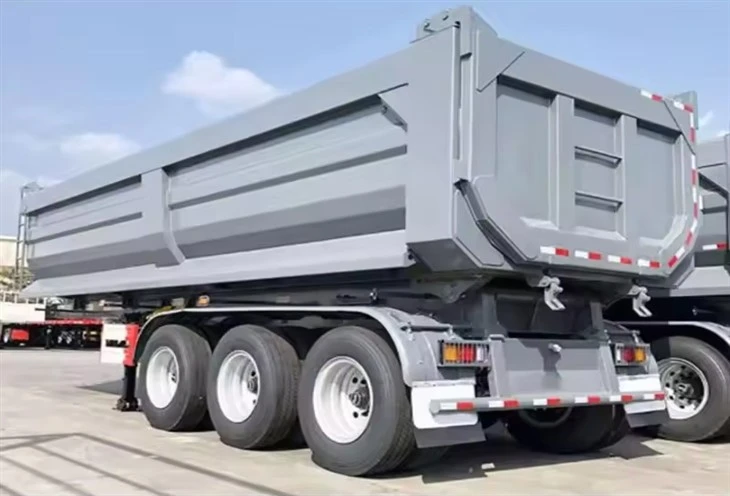

In many places, trailers must be equipped with a fully functional air brake system that meets specific performance criteria. For example, the brake system must be able to stop the trailer within a certain distance when traveling at a specified speed. This is to ensure that the trailer can be safely halted in an emergency situation.
Trailers are also often required to have a warning system that alerts the driver if the air pressure in the system drops below a certain level. This is a safety feature that helps prevent brake failure due to low air pressure.
Additionally, regular inspections and maintenance of the air brake system are mandatory in most jurisdictions. These inspections are designed to identify and address any potential issues before they cause a safety hazard.
Maintenance Requirements for Air Brake Systems
Proper maintenance of the air brake system is essential to ensure its reliability and compliance with legal requirements.
Regular Inspections: A visual inspection of the air brake components should be carried out regularly. This includes checking for signs of wear, damage, or leaks in the air lines, fittings, brake chambers, and valves. Any components that show signs of excessive wear or damage should be replaced immediately.
Air System Checks: The air pressure in the storage tanks should be checked regularly to ensure it is within the recommended range. Low air pressure can indicate a problem with the air compressor, a leak in the system, or a faulty valve.
Brake Chamber Adjustment: Over time, the brakes may require adjustment to maintain proper braking performance. Brake chamber adjustment ensures that the brake shoes or pads make proper contact with the brake drums or rotors, providing effective braking.
Lubrication: Some components of the air brake system, such as the brake chambers and valves, may require periodic lubrication to prevent corrosion and ensure smooth operation.
Our Rear Dump Tipper Trailer Offerings
At our company, we offer a range of high - quality Rear Dump Tipper Trailers that are designed to meet the most stringent air - brake requirements. Our Tri Axle Tipper Trailer is a popular choice for customers who need a trailer with excellent load - carrying capacity and reliable braking performance. The air brake system in this trailer is engineered to provide consistent stopping power, even when carrying heavy loads.
Our Universal Rear Tipping Semi - Trailer is another versatile option. It is designed to be compatible with a variety of tractors and can be used in different applications. The air brake system in this trailer is designed for easy maintenance and long - term reliability.
For those who need a high - capacity trailer, our 60tons 3 Axles Tipper Semi Trailer is an ideal choice. With a large load capacity, this trailer requires a robust air brake system to ensure safe operation. Our engineers have designed the air brake system in this trailer to handle the high demands of heavy - duty use.
Conclusion
Air brakes are an essential component of Rear Dump Tipper Trailers, providing the necessary stopping power and reliability for heavy - duty operations. Understanding the air - brake requirements, including the key components, legal standards, and maintenance needs, is crucial for ensuring the safety and performance of these trailers.
If you are in the market for a Rear Dump Tipper Trailer, we are here to help. Our team of experts can provide you with detailed information about our trailers and their air brake systems. We are committed to providing high - quality products that meet your specific needs. Contact us today to start the procurement discussion and take the first step towards getting a reliable Rear Dump Tipper Trailer for your business.
References
- Federal Motor Carrier Safety Administration (FMCSA). Commercial Motor Vehicle Brake Systems.
- SAE International. Standards related to trailer air brake systems.
- Various industry publications on heavy - duty vehicle safety and maintenance.