

As a respected side lifter trailer supplier, I'm constantly attuned to the industry's environmental implications. Side lifter trailers are invaluable in the container - handling and transportation sectors, but it's essential to understand their environmental impacts comprehensively.
1. Fuel Consumption and Emissions
One of the most significant environmental concerns associated with side lifter trailers is their fuel consumption and the resulting emissions. These trailers are often heavy - duty vehicles designed to lift and transport large containers. The engines powering them typically consume a substantial amount of diesel fuel.
Diesel engines emit a variety of pollutants, including nitrogen oxides (NOx), particulate matter (PM), and carbon monoxide (CO). NOx contributes to the formation of smog and acid rain. Particulate matter, especially fine particles (PM2.5), can penetrate deep into the lungs and cause respiratory problems. Carbon monoxide is a toxic gas that reduces the oxygen - carrying capacity of the blood.
The amount of fuel consumed by a side lifter trailer depends on several factors, such as its load, the distance traveled, and the driving conditions. For instance, a fully - loaded 37 Ton Sidelifter Container Trailer will require more fuel to operate compared to an empty one. Similarly, stop - and - go traffic in urban areas will lead to higher fuel consumption than continuous highway driving.
To mitigate these issues, some side lifter trailers are now being equipped with advanced engine technologies. These engines are designed to be more fuel - efficient, reducing both fuel consumption and emissions. For example, some models feature common - rail fuel injection systems, which improve the combustion process and result in lower emissions. Additionally, exhaust after - treatment systems, such as diesel particulate filters (DPF) and selective catalytic reduction (SCR) systems, can be installed to reduce the amount of harmful pollutants released into the atmosphere.
2. Noise Pollution
Side lifter trailers can also be a source of noise pollution. The operation of the lifting mechanism, the movement of the container, and the engine all generate noise. In industrial areas, the constant noise from side lifter trailers can have a negative impact on the well - being of nearby workers and residents.
The noise level of a side lifter trailer depends on its design and the condition of its components. Older models may produce more noise due to worn - out parts or less advanced noise - reduction technologies. Newer trailers, on the other hand, are often designed with noise - dampening materials and improved mechanical systems to reduce noise emissions.
For example, the use of rubber - lined components in the lifting mechanism can help to reduce the noise generated when the container is being lifted or lowered. Additionally, engine enclosures can be designed to absorb and block engine noise, preventing it from spreading into the surrounding environment.

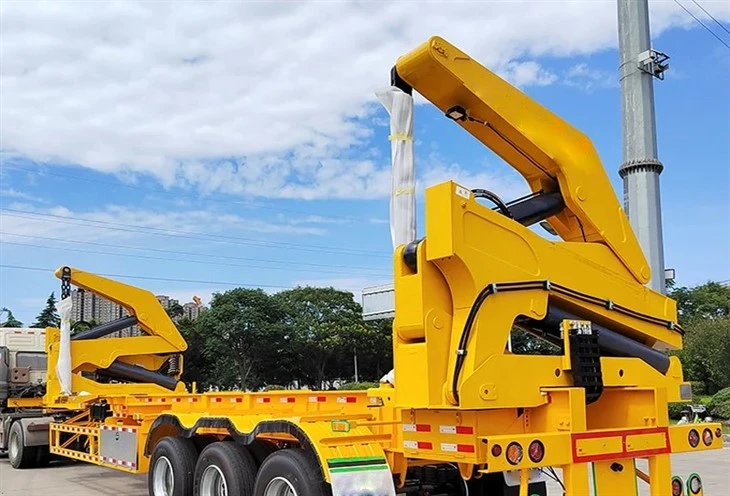
Noise pollution can have several health effects, including hearing loss, stress, and sleep disturbance. To address this issue, it's important for operators to maintain their side lifter trailers properly and for manufacturers to continue to invest in research and development to reduce noise levels.
3. Land Use and Habitat Disruption
The use of side lifter trailers is often associated with large - scale container terminals and transportation hubs. These facilities require significant amounts of land for container storage, vehicle movement, and other operations. The construction and expansion of these facilities can lead to habitat disruption and the loss of natural ecosystems.
When a new container terminal is built, natural habitats such as forests, wetlands, or grasslands may be cleared to make way for the development. This can have a detrimental effect on local wildlife, as it destroys their homes and disrupts their food chains. Additionally, the increased traffic and human activity associated with container terminals can further impact wildlife by causing fragmentation of habitats and increasing the risk of collisions between vehicles and animals.
To minimize the impact on land use and habitats, container terminal operators can implement sustainable development practices. For example, they can choose to build on previously developed or brownfield sites instead of pristine natural areas. They can also incorporate green spaces and wildlife corridors into the design of the terminal to provide some habitat for local species.
4. Waste Generation
Side lifter trailers generate waste in several ways. During their manufacturing process, there is waste from the production of components such as steel frames, hydraulic systems, and electrical wiring. This waste includes scrap metal, plastic, and other materials.
In addition, the maintenance and repair of side lifter trailers also generate waste. Used engine oil, filters, and worn - out parts need to be disposed of properly. If not managed correctly, these waste materials can contaminate soil and water sources.
To address this issue, manufacturers can implement recycling programs in their production facilities. For example, scrap metal can be recycled and reused in the manufacturing process. Operators can also ensure that waste generated during maintenance and repair is disposed of in an environmentally friendly manner. They can work with certified waste management companies to ensure that used oil and other hazardous materials are recycled or treated properly.
5. Positive Environmental Aspects
Despite the negative environmental impacts, side lifter trailers also have some positive aspects. They are highly versatile and efficient in container handling. Compared to traditional methods of container loading and unloading, side lifter trailers can significantly reduce the time and labor required. This efficiency can lead to a reduction in overall energy consumption in the container transportation process.
For example, a Container Side Lifter Trailer can quickly and easily lift a container from the ground or a storage area and place it on a truck or a ship. This reduces the need for multiple pieces of equipment and the associated energy consumption.
Moreover, the use of side lifter trailers can also reduce the number of trips required for container transportation. A 20ft Container Side Loader Trailer can handle a 20 - foot container directly, eliminating the need to transfer the container between different vehicles or storage areas. This reduces the mileage traveled by vehicles and, consequently, the fuel consumption and emissions.
6. Future Trends and Solutions
The side lifter trailer industry is constantly evolving, and there are several trends that indicate a move towards more environmentally friendly practices. One such trend is the development of electric and hybrid side lifter trailers. These trailers use electric motors or a combination of electric and diesel engines, which can significantly reduce emissions and fuel consumption.
Another trend is the use of intelligent technologies in side lifter trailers. For example, some trailers are now equipped with sensors and control systems that can optimize the lifting and transportation process. These systems can adjust the power output of the engine based on the load and the driving conditions, resulting in more efficient operation and lower emissions.
As a side lifter trailer supplier, we are committed to promoting these environmentally friendly technologies and practices. We work closely with manufacturers to ensure that our trailers meet the highest environmental standards. We also provide training and support to our customers to help them operate their trailers in an environmentally responsible manner.
If you are in the market for a side lifter trailer and are concerned about its environmental impact, we invite you to contact us. Our team of experts can provide you with detailed information about the environmental features of our trailers and help you choose the most suitable model for your needs. We look forward to discussing your requirements and working with you to find a sustainable solution for your container - handling and transportation needs.
References
- International Maritime Organization (IMO). Guidelines on Greenhouse Gas Emission Reduction for Maritime Transport.
- European Union. Directive on Environment - related Requirements for Heavy - Duty Vehicles.
- United Nations Environment Programme (UNEP). Report on the Environmental Impact of the Transportation Sector.