

What are the environmental impacts of using a bulk cement tank trailer?
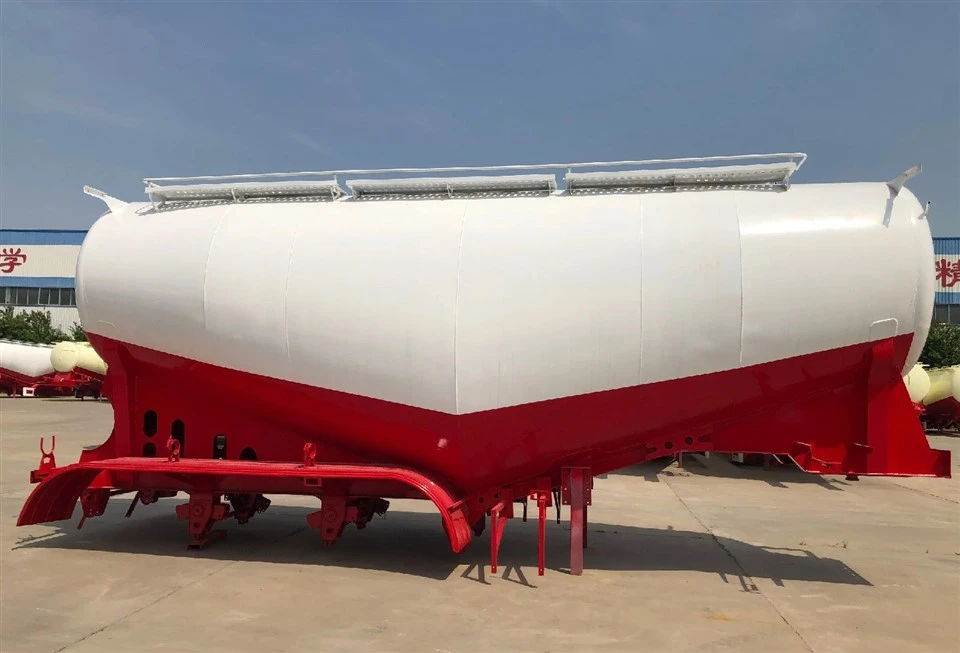
As a supplier of bulk cement tank trailers, I've witnessed firsthand the crucial role these vehicles play in the construction industry. Bulk cement tank trailers are designed to transport large quantities of cement efficiently, but it's essential to understand their environmental impacts. In this blog, I'll explore both the positive and negative environmental aspects associated with using bulk cement tank trailers.
Positive Environmental Impacts
Reduced Packaging Waste
One of the most significant environmental benefits of using bulk cement tank trailers is the reduction in packaging waste. Traditional cement transportation often involves the use of paper or plastic bags. These bags are single - use items that contribute to landfill waste. When cement is transported in bulk, there's no need for such packaging. This not only saves resources used in the production of the bags but also reduces the amount of waste that ends up in landfills. For example, a single 42cbm Bulk Cement Tanker Trailer 42cbm Bulk Cement Tanker Trailer can carry a large volume of cement that would otherwise require thousands of individual bags.
Energy Efficiency in Transportation
Bulk cement tank trailers are designed to be highly efficient in terms of transportation. They can carry a large amount of cement in a single trip compared to transporting the same amount in smaller, bagged quantities. This means fewer trips are required to deliver the same volume of cement, which in turn reduces fuel consumption and greenhouse gas emissions. A well - maintained 45 CBM Bulk Cement Semi Trailer 45 CBM Bulk Cement Semi Trailer can optimize its load capacity and route planning to minimize energy use.
Potential for Recycling and Reuse
In some cases, the cement residue left in the tank trailers can be recycled or reused. This reduces the amount of cement that is wasted. Additionally, the tank trailers themselves are made of materials such as steel, which can be recycled at the end of their useful life. Recycling these materials helps conserve natural resources and reduces the energy required to produce new trailers.
Negative Environmental Impacts
Air Pollution
One of the main environmental concerns associated with bulk cement tank trailers is air pollution. Cement is a fine powder, and during the loading, unloading, and transportation processes, there is a risk of cement dust being released into the air. Cement dust contains particulate matter (PM), which can be harmful to human health when inhaled. It can also have a negative impact on the environment, contributing to haze and reducing air quality. For example, if a 3 Axle Bulk Cement Semi Trailer 3 Axle Bulk Cement Semi Trailer is not properly sealed during transportation, dust can escape into the atmosphere.
Noise Pollution
Bulk cement tank trailers can also contribute to noise pollution. The engines of these trailers, as well as the equipment used for loading and unloading the cement, can generate significant noise levels. This can be a nuisance to people living and working in the vicinity of the transportation routes and loading/unloading sites. Prolonged exposure to high - level noise can have negative impacts on human health, including hearing loss and stress.
Fuel Consumption and Greenhouse Gas Emissions
Although bulk cement tank trailers are more energy - efficient than transporting bagged cement in terms of load capacity, they still consume a significant amount of fuel. The diesel engines commonly used in these trailers emit greenhouse gases such as carbon dioxide (CO₂), nitrogen oxides (NOₓ), and particulate matter. These emissions contribute to global warming and climate change. As the demand for cement transportation increases, so does the amount of greenhouse gas emissions from these trailers.
Mitigating the Negative Environmental Impacts
Dust Control Measures
To reduce air pollution from cement dust, several dust control measures can be implemented. For example, tank trailers can be equipped with dust - suppression systems. These systems can use water sprays or filters to capture and contain the dust during loading and unloading operations. Additionally, proper maintenance of the trailers, including checking for leaks and ensuring tight seals, can prevent dust from escaping during transportation.
Noise Reduction Technologies
To address noise pollution, manufacturers can incorporate noise - reduction technologies into the design of bulk cement tank trailers. This can include using quieter engines, adding sound - absorbing materials to the trailers, and designing the loading and unloading equipment to operate more quietly. Additionally, transportation companies can plan their routes to avoid residential areas and limit the hours of operation to reduce the impact on local communities.
Fuel Efficiency Improvements
To reduce fuel consumption and greenhouse gas emissions, there are several strategies that can be employed. One approach is to use more fuel - efficient engines, such as those with advanced combustion technologies or hybrid powertrains. Another strategy is to optimize route planning using GPS technology to minimize travel distances and avoid traffic congestion. Additionally, regular maintenance of the trailers, including proper tire inflation and engine tuning, can improve fuel efficiency.

Conclusion
Bulk cement tank trailers have both positive and negative environmental impacts. On the one hand, they offer significant benefits in terms of reducing packaging waste, improving transportation efficiency, and enabling recycling. On the other hand, they contribute to air pollution, noise pollution, and greenhouse gas emissions. As a supplier of bulk cement tank trailers, we are committed to working with our customers to mitigate the negative environmental impacts. By implementing dust control measures, noise reduction technologies, and fuel - efficiency improvements, we can ensure that the use of bulk cement tank trailers is as environmentally friendly as possible.
If you're in the market for a high - quality bulk cement tank trailer, we invite you to reach out to us. Our team of experts can provide you with detailed information about our products and help you choose the right trailer for your needs. Whether you're looking for a 42cbm Bulk Cement Tanker Trailer, a 45 CBM Bulk Cement Semi Trailer, or a 3 Axle Bulk Cement Semi Trailer, we have the solution for you. Contact us today to start the procurement process and contribute to a more sustainable construction industry.
References
- American Society of Civil Engineers (ASCE). (2020). Environmental Impact Assessment of Cement Transportation.
- International Energy Agency (IEA). (2021). Fuel Efficiency in Heavy - Duty Vehicles.
- World Health Organization (WHO). (2019). Air Quality Guidelines for Particulate Matter.