

As a supplier of lowbed semi - trailers, I've witnessed firsthand the critical relationship between road surfaces and trailer tires. The performance, durability, and safety of lowbed semi - trailers are significantly influenced by the type of road they traverse. In this blog, I'll explore how different road surfaces impact a lowbed semi - trailer's tires, providing valuable insights for both operators and potential buyers.
Smooth Asphalt Roads
Smooth asphalt roads are the ideal surface for lowbed semi - trailers. These roads offer a consistent and even surface, which minimizes tire wear and tear. The smoothness reduces the amount of friction between the tires and the road, allowing the tires to roll with less resistance. This not only improves fuel efficiency but also extends the lifespan of the tires.

On smooth asphalt, the tires experience less vibration and shock, which means fewer internal damages. The even distribution of weight across the tire tread helps maintain proper tire shape and pressure. As a result, the risk of blowouts and premature tire failure is significantly reduced. For operators, this translates to lower maintenance costs and fewer disruptions to their transportation schedules.
However, it's important to note that even on smooth asphalt, proper tire maintenance is still crucial. Regularly checking tire pressure, alignment, and tread depth can help ensure optimal performance and safety. If you're in the market for a reliable lowbed semi - trailer for smooth asphalt operations, our 60 Ton Lowbed Trailer is a great choice. It's designed to handle heavy loads while providing a stable and efficient ride on smooth surfaces.
Rough Concrete Roads
Rough concrete roads present a more challenging environment for lowbed semi - trailer tires. The uneven surface and rough texture increase the friction between the tires and the road, leading to accelerated tire wear. The constant jolts and vibrations can cause the tires to heat up quickly, which may lead to internal damage and reduced tire lifespan.
The rough concrete can also cause the tires to experience more lateral movement, which puts additional stress on the sidewalls. This can increase the risk of sidewall cuts, bulges, and blowouts. To mitigate these risks, operators should consider using tires with a tougher sidewall construction and a more aggressive tread pattern.

Despite the challenges, rough concrete roads are common in many industrial areas and construction sites. Our 120 - Ton Gooseneck Low - Deck Trailer is built to withstand the rigors of rough concrete roads. It features a robust suspension system and high - quality tires that can handle the increased stress and wear.
Gravel Roads
Gravel roads are another type of surface that can have a significant impact on lowbed semi - trailer tires. The loose gravel can cause the tires to slip and slide, which increases the risk of skidding and loss of control. The sharp edges of the gravel can also cut into the tire tread, leading to punctures and premature wear.
On gravel roads, the tires need to have good traction to prevent slipping. Tires with a deep tread pattern and a wide footprint are recommended. Additionally, operators should reduce their speed to minimize the risk of damage to the tires.
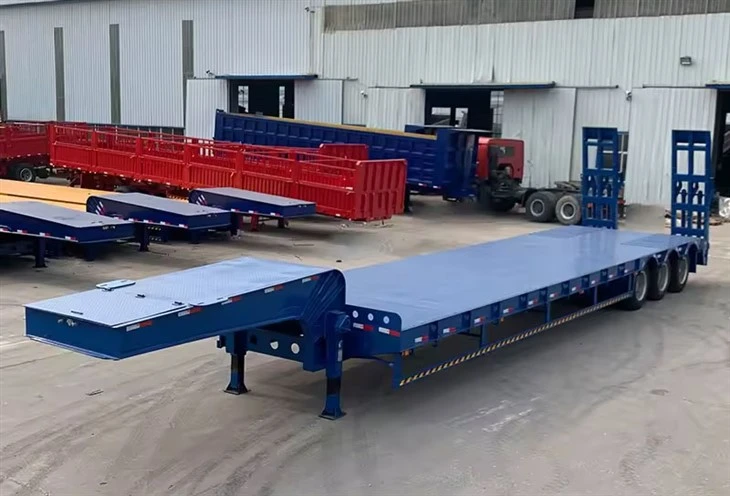
Our lowbed semi - trailers are designed to be versatile and can handle gravel road conditions. However, it's important to note that regular tire inspections are even more crucial when operating on gravel roads. Any signs of damage should be addressed immediately to avoid further problems.
Muddy and Wet Roads
Muddy and wet roads pose unique challenges for lowbed semi - trailer tires. The reduced traction on these surfaces can make it difficult to control the trailer, especially when braking or turning. The tires can easily get stuck in the mud, causing delays and potential damage to the trailer.
Wet roads also increase the risk of hydroplaning, where a layer of water builds up between the tire and the road surface, causing the tire to lose contact with the road. To prevent hydroplaning, tires should have a proper tread depth and a design that allows water to be channeled away from the tire.
When operating on muddy or wet roads, it's essential to use tires with good mud and wet traction capabilities. Our trailers can be equipped with specialized tires to handle these conditions. However, operators should also exercise caution and adjust their driving style accordingly.
Snow - Covered and Icy Roads
Snow - covered and icy roads are among the most challenging surfaces for lowbed semi - trailer tires. The lack of traction on these surfaces can make it extremely difficult to control the trailer, increasing the risk of accidents. Tires need to have excellent snow and ice grip to ensure safe operation.

Winter tires are specifically designed for snow and ice conditions. They have a softer rubber compound that remains flexible in cold temperatures, providing better traction. The tread pattern of winter tires is also optimized to grip the snow and ice, reducing the risk of slipping.
Our company understands the importance of safety on snow - covered and icy roads. We can provide lowbed semi - trailers equipped with winter tires or offer advice on the best tire options for these conditions.
Impact on Tire Selection
The type of road surface plays a crucial role in tire selection for lowbed semi - trailers. Operators need to choose tires that are suitable for the specific road conditions they will encounter. For example, if the trailer will primarily operate on smooth asphalt roads, tires with a low - rolling resistance and a long - lasting tread may be the best choice. On the other hand, if the trailer will be used on rough concrete or gravel roads, tires with a more robust construction and a deeper tread pattern are recommended.
As a supplier, we work closely with our customers to understand their specific needs and recommend the most appropriate tire options for their lowbed semi - trailers. We also offer a wide range of trailers, including the Wholesale Low Bed Semi - trailers From Manufacturers, to meet different requirements.
Conclusion
In conclusion, different road surfaces have a profound effect on a lowbed semi - trailer's tires. Smooth asphalt roads offer the best conditions for tire performance and longevity, while rough concrete, gravel, muddy, wet, and snow - covered roads present various challenges. By understanding these impacts and choosing the right tires, operators can ensure the safety, efficiency, and durability of their lowbed semi - trailers.
If you're interested in purchasing a lowbed semi - trailer or need more information about tire selection and maintenance, please don't hesitate to contact us. We're here to help you make the best decisions for your transportation needs.
References
- "Tire Technology Handbook" by Klaus - Jürgen Wolter
- "Commercial Vehicle Tire Engineering" by William F. Gale